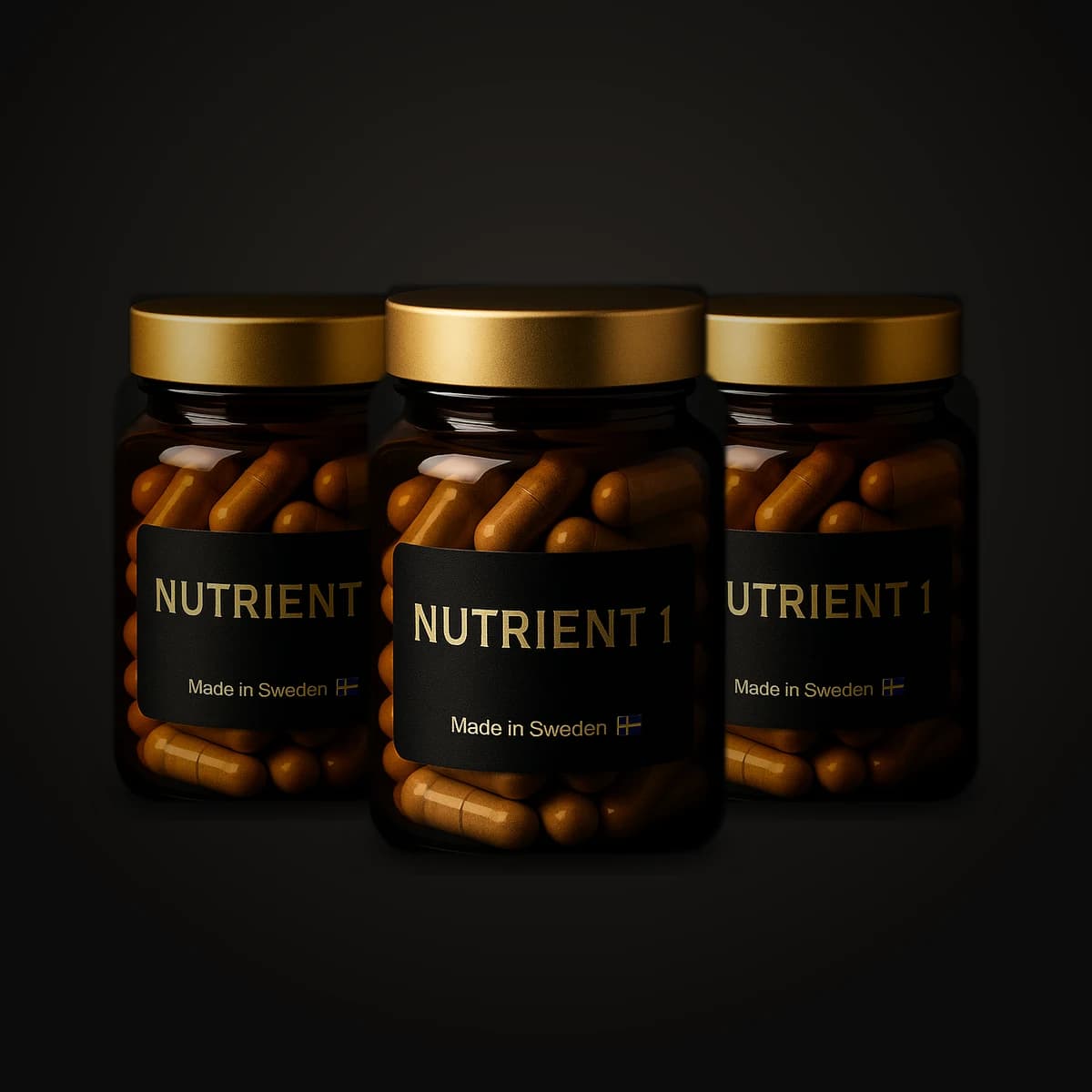
 Made & designed in Sweden.
Ask when to take your vitamins and you’ll hear everything from “first thing on an empty stomach” to “before bed.” The research is less dramatic than the advice. The clock matters less than two simpler things: whether you take them with food, and whether you take them every day.
Fat-soluble vitamins need a meal
Vitamins A, D, E and K dissolve in fat, not water. They are absorbed together with the fat in a meal, so taking them on an empty stomach means less is taken up.
Studies on vitamin D illustrate this. In one trial, vitamin D3 taken with a meal containing fat led to higher absorption than the same dose with a fat-free meal. In another, people who moved their vitamin D supplement to their largest meal of the day saw their vitamin D levels rise noticeably.
Water-soluble vitamins are more flexible
The B vitamins and vitamin C dissolve in water and don’t depend on dietary fat. In principle, you can take them any time. In practice, many people find supplements easier on the stomach with food, especially in the morning.
You may have heard that B vitamins in the evening keep you awake. There is little evidence for that. If you notice it yourself, simply take them earlier.
Minerals: with food, and mind the big doses
Minerals such as zinc can cause nausea when taken on an empty stomach, which is another reason to take supplements with a meal. Some minerals also compete for absorption when taken in large amounts at the same time — high-dose calcium and iron are the classic example. In the moderate amounts found in a combined daily supplement, this is less of a concern, but it is worth keeping in mind if you also take separate high-dose mineral supplements.
Morning or evening?
For most vitamins and minerals, there is no strong evidence that morning is better than evening, or the other way round. Choose the meal you never skip. For many people that is breakfast or dinner.
Consistency beats timing
Your body’s vitamin and mineral status is built over weeks and months, not hours. Taking a supplement every day with the same meal is more useful than finding the perfect hour and forgetting it twice a week. Tie it to something you already do — breakfast, your morning coffee, or dinner.
- Keep the jar where you eat that meal
- Take it with food that contains some fat
- Don’t double up if you miss a day — just continue the next day
When to talk to a doctor first
Some nutrients interact with medication. Vitamin K, for example, affects blood clotting, so people who use blood-thinning medication should consult a doctor before using products containing vitamin K. The same applies if you have a medical condition or are pregnant or breastfeeding.
Sources
- Dawson-Hughes B et al. Dietary fat increases vitamin D-3 absorption. J Acad Nutr Diet. 2015;115(2):225–230
- Mulligan GB, Licata A. Taking vitamin D with the largest meal improves absorption and results in higher serum levels of 25-hydroxyvitamin D. J Bone Miner Res. 2010;25(4):928–930
- NIH Office of Dietary Supplements — Dietary supplements: what you need to know
This article is general information about nutrition and is not medical advice. Food supplements should not be used as a substitute for a varied diet and a healthy lifestyle. If you have a medical condition, are pregnant or take medication, talk to your doctor before taking supplements.